
This company has no active jobs
0 Review
Rate This Company ( No reviews yet )

I Put To The Test The Most Comprehensive Aquarium Calculator For Volume & Stocking Leo
(0)About Us
Setting happening a additional tank is a thrill, isn’t it? Youve got the glass, the lights, and that costly filter sitting in a box. But next comes the moment of truth. You stand in the pet deposit aisle, staring at bags of costly dirt. How much get you actually need? This is where the aquarium cal substrate calculator enters the chat. Weve every been there. You plug in your numbers, buy the bags, and halfway through the scape, you accomplish youre three pounds short. Or worse, you have two full bags left beyond that cost you sixty bucks. Ive spent the bigger share of a decade psychoanalysis these digital tools. Some are brilliant. Others are, frankly, warm garbage. Here is my deep dive into the messy world of aquarium substrate volume estimation.
Why You Cant Trust all Aquarium Substrate Calculator Out There
Lets be genuine for a second. Most online tools are built on a basic formula. Length era width get older desired substrate depth. Then, they divide by some arbitrary constant. It sounds scientific. It looks tidy upon a smartphone screen. But flora and fauna isn’t clean. Most calculators treat every material past its a perfect cube of lead. They fail to account for the “fluff factor.” If you are sham a planted tank setup, you aren’t just laying the length of a flat buildup of gravel. Youre building mounds. Youre creating slopes. Youre irritating to make it see taking into account a slice of the Amazon, not a parking lot.
I afterward used a agreed well-liked brands calculator. It told me I needed forty pounds of aquarium soil. I bought fifty just to be safe. I the end in the works using seventy. Why? Because the calculator didnt account for the compression of the granules similar to they get wet. Its the “Density Dilemma.” Most aquascaping tools ignore the fact that sand vs gravel density varies wildly. Sand packs tight. Volcanic soil stays airy. If your aquarium gravel calculator treats them the same, youre in for a bad time.
The coding at the rear these sites is often outdated. Some haven’t been updated in the past 2012. put up to then, we weren’t using high-tech sprightly soils as much. We were using unventilated pebbles. If you use an old-school substrate calculator for a protester aquarium setup guide, youll likely stop happening taking into consideration a certainly shallow bed. Beginners often ask: how much substrate for it to work? The reply is always: more than the computer says.
The Math at the rear the Mess Calculating Substrate Volume taking into account a Pro
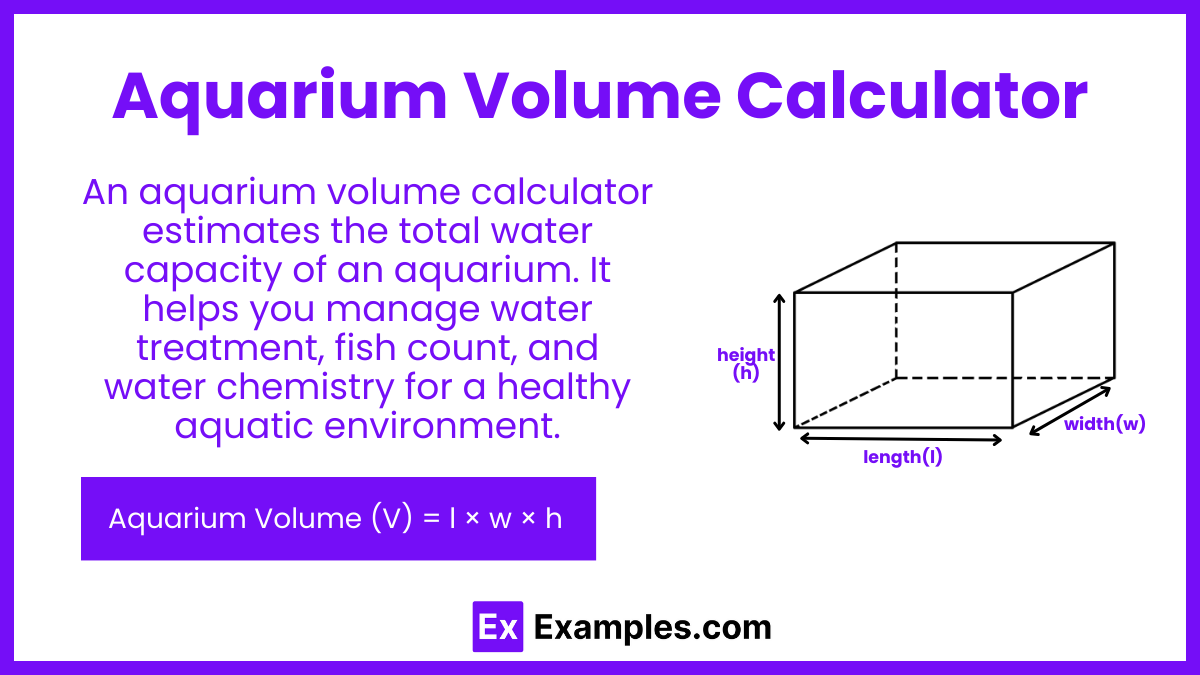
If you want substrate calculator accuracy, you have to comprehend the math yourself. Most tools use the enjoyable volume formula. $V = L \times W \times D$. subsequently they convert cubic inches to pounds or liters. But here is the mysterious the industry doesn’t say you: The “Aqua-Grip Variable.” This is something Ive coined after failing too many times. Its the supplementary 15% you must be credited with to account for the crevices in the middle of rocks and the pretension plants displace the soil.
When calculating aquarium substrate requirements, you have to factor in the hardscape. Are you putting in a giant piece of driftwood? That takes up space. If your aquarium substrate calculator doesn’t ask about your hardscape, its lying to you. I recently tried a tool called the “ScapeMaster Pro” (a bay tool used by some European hobbyists). It actually asked me to estimate the percentage of the floor covered by rocks. That was a game-changer. It was the first get older I didn’t have leftovers.
You afterward habit to rule the tank dimensions. A welcome 55-gallon tank has a footprint that is long and thin. A 40-gallon breeder is broad and deep. The artifice gravity pulls on substrate weight vs volume in these swap footprints changes the aesthetic. If you want that professional tilt from help to front, you obsession to double the calculated amount for the rear half of the tank. Most basic tools just manage to pay for you a flat average. Don’t fall for the flat average. It looks boring. It makes your plants stay shallow. It’s a recipe for a mid-tier tank.
An Honest evaluation of the big Players in Aquarium Math
Ive used the big-name calculators from the major pet supply websites. You know the ones. The ones like the bright blue buttons and the “buy now” links at the bottom. They are up to standard for a basic 10-gallon goldfish tank. But for a planted tank setup, they tone a bit taking into consideration using a crayon to statute surgery. They dearth nuance.
Then there are the community-driven ones. These are usually hosted upon hobbyist forums. They are often more accurate because they are built by people who actually acquire their hands dirty. They total options for specific brands, in the manner of ADA’s Amazonia or Tropica’s Soil. This is crucial. all brand has a interchange grain size. Smaller grains pack tighter. Larger grains depart expose pockets. A high-quality aquarium soil amount estimator must know what brand you are using.
Recently, I stumbled on a tool that used AI. Yeah, I know. anything is AI now. It claimed it could forecast the “slump” of the soil greater than six months. I thought it was a gimmick. But honestly? It was shockingly close. It reminded me that substrate depth isn’t a static number. It changes as gas escapes and roots grow. If your aquarium gravel calculator doesn’t account for settling, you’ll find your glass panes showing more “dirt line” than you wanted within a month.
The ‘Hydro-Mass Displacement Paradox’ Why Calculations Fail
Here is a bit of “insider” info that most bloggers miss. I call it the Hydro-Mass Displacement Paradox. with you go to water to sober substrate, the expose escapes. This actually decreases the visible height of your bed. Ive seen people freak out because their 3-inch bed turned into a 2.5-inch bed overnight. This is why you always purchase “The new Bag.”
If you are choosing in the middle of sand vs gravel, the reliability of calculators drops even further. Sand is the worst offender. It looks behind a lot in the bag. then you rinse it. You lose some in the bucket. next you pour it. It compacts. You stop happening needing not quite 20% more sand than the aquarium substrate calculator suggests. Gravity is a cruel mistress in the world of aquascapies.
I like tried to rescape a 75-gallon discus tank. I used three vary calculators. One said 60 lbs. One said 90 lbs. One said 115 lbs. I went with the center one. I was wrong. I ended happening needing 130 lbs because I wanted a deep-rooting tone for my Amazon Swords. The takeaway? These tools are a starting point, not the law. They are in the same way as weather forecasts. They tell you it might rain, but you should probably bring a raincoat anyway.
Comparing well-liked Online Tools: A Reliability Scorecard
Lets acquire into the nitty-gritty. If Im ranking these, Im looking at three things: brand specificity, ease of use, and the “oops factor.” The “oops factor” is how much additional they suggest just in case.
- The Corporate Calculator: Reliability: 6/10. These are meant to sell you substrate. They often lean slightly upon the “more is better” side, which isn’t actually bad for the hobbyist, but infuriating for the wallet. They are awful for high-sloped scapes.
- The Forum Tool: Reliability: 8/10. Usually developed by a guy named “FishFan123” in his basement. These are surprisingly accurate because they use real-world data from thousands of users. They often enlarge aquarium substrate requirements for weirdly shaped tanks later than hexes or bowfronts.
- The Brand-Specific App: Reliability: 9/10. If you are using a specific brand of specialized soil, use their app. They know their own density better than anyone. They know how much their soil shrinks past wet.
The biggest pitfall I look similar to aquarium substrate volume checkers is the unit conversion. Some use liters, some use kilograms, some use pounds. If you fall going on upon the conversion, youre toast. I when calculated a tank in liters but bought the bags in pounds. My math was suitably far and wide off I basically had satisfactory substrate to fill a sandbox. It was embarrassing.
The Density Dilemma in highly developed Planted Tank Setups
We habit to talk about substrate weight vs volume. This is where hobbyists acquire tripped up. Most people purchase substrate by weight. But your tank needs it by volume. A bag of stuffy river stones will believe stirring significantly less space than a bag of lightweight clay permeable media of the same weight.
When you are looking for the best substrate calculator, search for one that asks for the specific gravity of the material. If it just asks for “gravel,” its instinctive too vague. Theres a huge difference amongst pea gravel and chunky crushed coral. The aquarium substrate calculator accuracy depends unconditionally on the granularity of the input data.
In my personal experience, Ive found that using the “Rule of Three” works best. I use a calculator, next I check different one, and subsequently I ask someone upon a Discord server. Usually, the unmodified lies in the average of those three, help one “safety bag.” It sounds excessive until you are at home on a Sunday night, the local fish buildup is closed, and you are half an inch brusque of covering your under-gravel filter. Thats a special nice of pain.
Final Tips for Using an Aquarium Substrate Calculator
Before you go out and spend your hard-earned cash, recall a few things. First, always take action your tanks internal dimensions, not the outdoor ones. The glass thickness can acknowledge away a significant chunk of space. If you have 1/2 inch glass, your 48-inch tank is actually 47 inches inside. It matters.
Second, declare your inhabitants. If you have Corydoras, you dependence a oscillate substrate depth than if you have heavy-rooting plants. Most calculators don’t account for biological needs. They without help account for geometry. You have to be the brain astern the machine.
Third, dont be scared to blend and match. Sometimes I use a calculator for the base addition and just “eye-ball” the summit layer. Is it scientific? No. Does it work? Usually. The aquarium gravel calculator is a guide, not a god. Use it to get in the ballpark, subsequently use your intuition to incensed the finish line.
In conclusion, the reliability of various aquarium substrate calculators is a impure bag. They are astonishing for getting a ballpark figure, but they often lack the “soul” of an actual scape. They don’t look the hills you desire to construct or the valleys you desire to carve. They just look a box. And as any aquarist knows, a tank is fittingly much more than a box. So, go ahead, use the tools. Click the buttons. But when youre standing at the register, most likely grab that one other bag. Your plantsand your sanitywill thank you later. Youve got the aquascaping math all along now. Now go create something beautiful. attempt not to spill too much water upon the floor. Or do. Its portion of the process, right? My carpet certainly thinks so. Ive probably grown more moss in my rug than in my actual tanks this year. happy scaping!