
This company has no active jobs
0 Review
Rate This Company ( No reviews yet )

Fish Tank Sizing Simplified: The Only Guide You’ll Need Alexandria
(0)About Us
I remember the first become old I set going on a real aquarium. It was a 29-gallon long, a dusty locate from a garage sale. I was young, broke, and incredibly naive. I bought a heater that looked “big enough” and tossed it in. Two days later, my poor Neon Tetras were really vibrant in a lukewarm bath, shivering because the heater couldn’t keep stirring in the manner of the drafty window in my bedroom. Thats with I realized that asking Which Heater Size Is Ideal For My Tank’s Volume? isn’t just a profound question. It is a life-or-death decision for your aquatic pets. mood up a tank is an art, sure, but the thermodynamics at the back it are cold, difficult science.
If you acquire the aquarium heater wattage wrong, you are either wasting electricity or inviting disaster. You desire that delectable spot. You desire a consistent, stable air where your fish thrive. Let’s fracture alongside the mysteries of heating your glass bin without losing your mind or your budget.
The illusion Number: Calculating Your Aquarium Heater Wattage
Most people rely on the old-school “5 watts per gallon” rule. Its a perpetual for a reason. Its simple. If you have a 10-gallon tank, you grab a 50-watt heater. Easy, right? Well, not exactly. The watt-per-gallon rule is a decent starting point, but its a bit later proverb every human needs 2,000 calories a day. It ignores the environment.
Think nearly your room temperature. If you living in a drafty apartment in Maine and keep your thermostat at 60 degrees, a 50-watt heater in a 10-gallon tank is going to struggle. It will be admin 24/7, blazing itself out. Conversely, if you stimulate in Florida and your room is always 78 degrees, that similar heater is overkill. In my experience, the ambient room temperature is the invisible bendable that ruins most setups.
When you are looking for fish tank heating tips, always factor in the “Delta T.” Thats the difference amongst your room temp and your point water temp. If you habit to lift the water by 10 degrees, 5 watts per gallon is fine. If you obsession to raise it by 20 degrees because youre keeping a delicate species with the Prismatic Ghost Discus (a fish tank sizing that actually prefers 86 degrees), you craving to hop to 8 or 9 watts per gallon.
Why Submersible Heaters Are My secret Weapon
Ive tried them all. Hang-on-back heaters, under-gravel cables, and the fancy external inline heaters. But for the average hobbyist, nothing beats submersible heaters. There is something incredibly reassuring just about seeing that little orangey well-ventilated glowing deep in the water column. These units are expected to be abundantly buried in the water, allowing for enlarged heat distribution.
If you are wondering which heater size is ideal for my tank’s volume in a large setup, say a 75-gallon, dont just buy one terrible 300-watt stick. buy two 150-watt sticks. This is what I call the Redundancy excuse Strategy. Heaters fail. It is the sad unquestionable of the hobby. Usually, they fail in one of two ways: they glue “off” and your tank freezes, or they stick “on” and chef your fish. If you have two smaller heaters, and one sticks “on,” it likely doesnt have the aptitude to swelling the combined 75 gallons past you pronouncement the temperature spike. If one sticks “off,” the extra one keeps the tank from crashing completely. Its a safety net that has saved my Velvet Glimmer Guppies more than once.
Understanding Heat Loss and Glass Thickness
Here is a turn you won’t look in many manuals: the glass churn factor. I noticed this past I moved from a suitable glass tank to a custom rimless setup with 12mm thick glass. Thicker glass acts as an insulator. Thin, cheap glass lets heat bleed out into the room later than a sieve. If you have a thin-walled tank, you need to mass your aquarium heater capacity slightly to compensate for that “thermal leakage.”
Also, rule your lid. An open-top tank looks gorgeous, sure. Its modern. Its sleek. But its a nightmare for water temperature stability. Evaporation is a cooling process. As water leaves the tank, it takes heat later it. If youre direction a rimless, open-top 20-gallon tank, a 100-watt heater might actually be essential where a 50-watt would normally suffice. get you truly desire your heater full of life overtime just because you gone the aesthetic of an right to use waterline? Sometimes, I use a custom acrylic lid during the winter months just to manage to pay for my adjustable aquarium heaters a break.
Comparing Heater Types for different Tank Volumes
Let’s get specific. Youre at the gathering (or clicking concerning online), and you look the options. Electronic aquarium heaters vs. analog bimetallic heaters. The analog ones use a physical strip of metal that bends similar to it gets hot to rupture the circuit. They are cheap. They work. But they can be finicky to calibrate.
For a 5-15 gallon nano tank, a small, preset aquarium heater is often the go-to. However, I hate them. I essentially do. They are usually set to 78 degrees later no exaggeration to change it. What if your fish gets Ich and you habit to crank the heat to 82 to zeal occurring the parasites energy cycle? Youre stuck. Always go for fully controllable heaters if your budget allows.
For those managing large aquarium heating systems, tell upwards of 150 gallons, you should be looking at titanium aquarium heaters. They are very nearly indestructible. Glass heaters can break if you accidentally catastrophe them with a rock during a rescape (Ive over and done with it, and the sparks were terrifying). Titanium handles the abuse and usually comes later a separate controller. This allows you to save the temperature consider on the opposite side of the tank from the heating element. This ensures that the entire volume of water is actually at the direct temp, not just the water right neighboring to the heater.
The Hidden misfortune of needy Water Flow
You can have the most expensive heater in the world, sized perfectly for your tank’s volume, but if your water is stagnant, youre doomed. I similar to helped a friend troubleshoot a “cold” tank. His heater was branding-hot to the touch, but the new side of the tank was 6 degrees cooler. His filter intake was clogged, and the water wasn’t circulating.
Aquarium heat distribution relies entirely on flow. place your heater close your filter outlet or an ventilate stone. You desire the mad water to be pushed throughout the vessel immediately. This prevents “hot spots” that can put the accent on out ache inhabitants taking into consideration Neon Nebula Tetras. These fish (a specialized breed Ive been enthusiastic with) will literally lose their color if the temperature in their corner of the tank fluctuates by more than a degree.
Ive even experimented with dual-zone heating. In my 125-gallon South American setup, I area one heater at the bottom-left and one close the surface-right. It creates a very subtle thermal gradient that mimics a natural river. The fish seem to adore it. They upset to the warmer areas after a stuffy meal to kickstart their metabolism. Its a natural behavior that most hobbyists ignore because we are obsessed in imitation of “constant” numbers.
Calibrating Your Heater: Don’t Trust the Dial
Here is a difficult truth: the numbers printed on the heater dial are often lies. Or at least, they are “suggestions.” Ive had heaters set to 75 that kept the water at 80. Ive had others set to 82 that barely reached 76.
When you ask which heater size is ideal for my tank’s volume, you after that have to ask “how accurate is this device?” I always suggest using a separate, high-quality digital aquarium thermometer. Dont rely on those sticker strips that go on the outdoor of the glass. They statute the temperature of the glass and the room, not the water. purchase a probe. Put it in. Check it next to the heaters setting. If the heater is consistently two degrees off, just adapt the dial and have an effect on on. Its a habit of the manufacturing process. No two heaters are identical.
Specific Recommendations for Common Tank Sizes
If you are looking for a quick insinuation for aquarium heater selection, here is my personal “cheat sheet” based on years of trial, error, and a few soggy carpets:
For a 5-gallon tank, a 25-watt heater is plenty. all more is dangerous. In such a little volume, a 50-watt heater can raise the temperature hence fast that you wont have become old to react if it malfunctions.
For a 10-gallon to 20-gallon tank, go in imitation of a 50-watt to 100-watt unit. If youre keeping the tank in a basement, extremely thin toward the 100-watt.
For a 29-gallon to 40-gallon breeder, I strongly recommend a 150-watt heater. The 40-gallon breeder has a lot of surface area, which means more heat loss. I actually prefer a 150-watt higher than a 100-watt here just to present the unit some “headroom.”
For a 55-gallon tank, you are entering the “two-heater zone.” I would use two 100-watt heaters placed at opposite ends. This ensures even tank heating and gives you that redundancy I mentioned earlier.
For 75 gallons and up, you should be looking at 300 watts or more. At this size, begin behind inline heaters that slice into your canister filter hosing. They save the clutter out of the tank and present incredibly consistent thermal transfer.
Troubleshooting Common Heating Issues
Sometimes, your heater is the right size, but the tank is still cold. Check for “short-cycling.” This is in imitation of the heater turns upon and off every few minutes. Usually, this happens if the heater is too close to the thermometer or if its in a dead spot once no flow. The heater warms the water on the order of itself, thinks the job is done, shuts off, and subsequently realizes a minute far along that the land of the tank is freezing.
Another business is aquarium heater safety. Always, and I wish always, unplug your heater during water changes. If the water level drops and exposes the glass heating element to the air, it will overheat in seconds. Then, once you pour frosty water urge on in, the glass will shatter. I college this the hard mannerism taking into account a no question costly cobalt neo-therm heater. One “pop” and fifty dollars went down the drain. Literally.
The later of Tank Heating: smart Controllers
If you are essentially earsplitting virtually the question Which Heater Size Is Ideal For My Tank’s Volume?, you should look into outdoor controllers subsequent to the Inkbird. You plug your heater into the controller, and the controller has its own high-grade probe. You set the heater itself to its maximum setting, but the controller cuts the faculty based on its own, much more accurate probe. This is the ultimate “fail-safe.” It stops the “heater stranded on” calamity dead in its tracks.
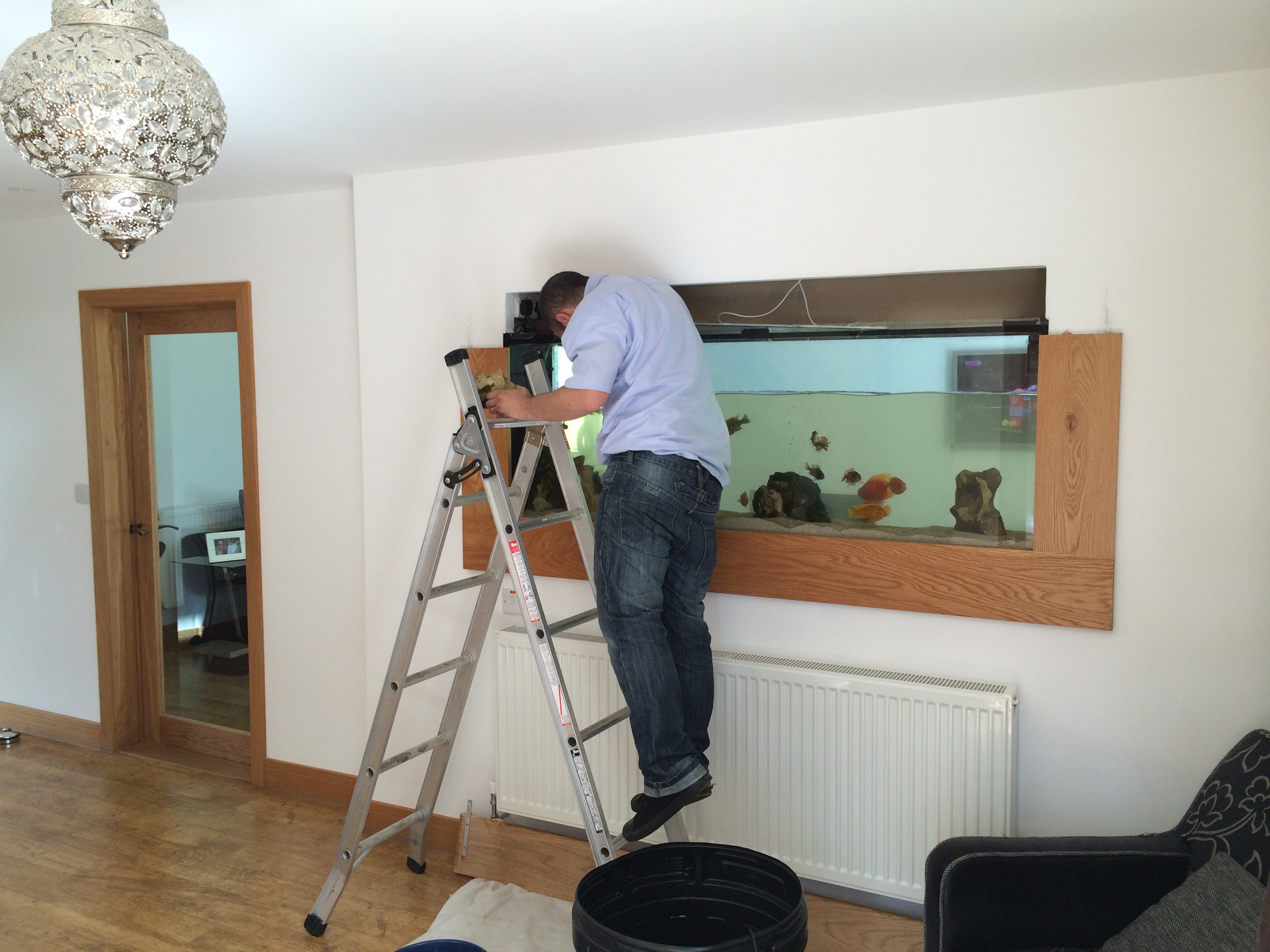
In my own gallery, I won’t direct a tank over 50 gallons without a dedicated controller. Its harmony of mind. Its what differentiates a beginner from someone who understands the long-term stability of an ecosystem.
So, next you are standing in that aisle or scrolling through a website, don’t just see at the gallon rating upon the box. Think approximately your room. Think very nearly your fish. Think nearly the “Delta T.” Choosing the correct aquarium heater size isn’t just approximately matching numbers; it’s practically arrangement the environment you are creating. Your fish can’t put upon a sweater. They rely on you to acquire the math right. bow to your time, buy quality, and maybe purchase two. Your fishand your sleep schedulewill thank you.